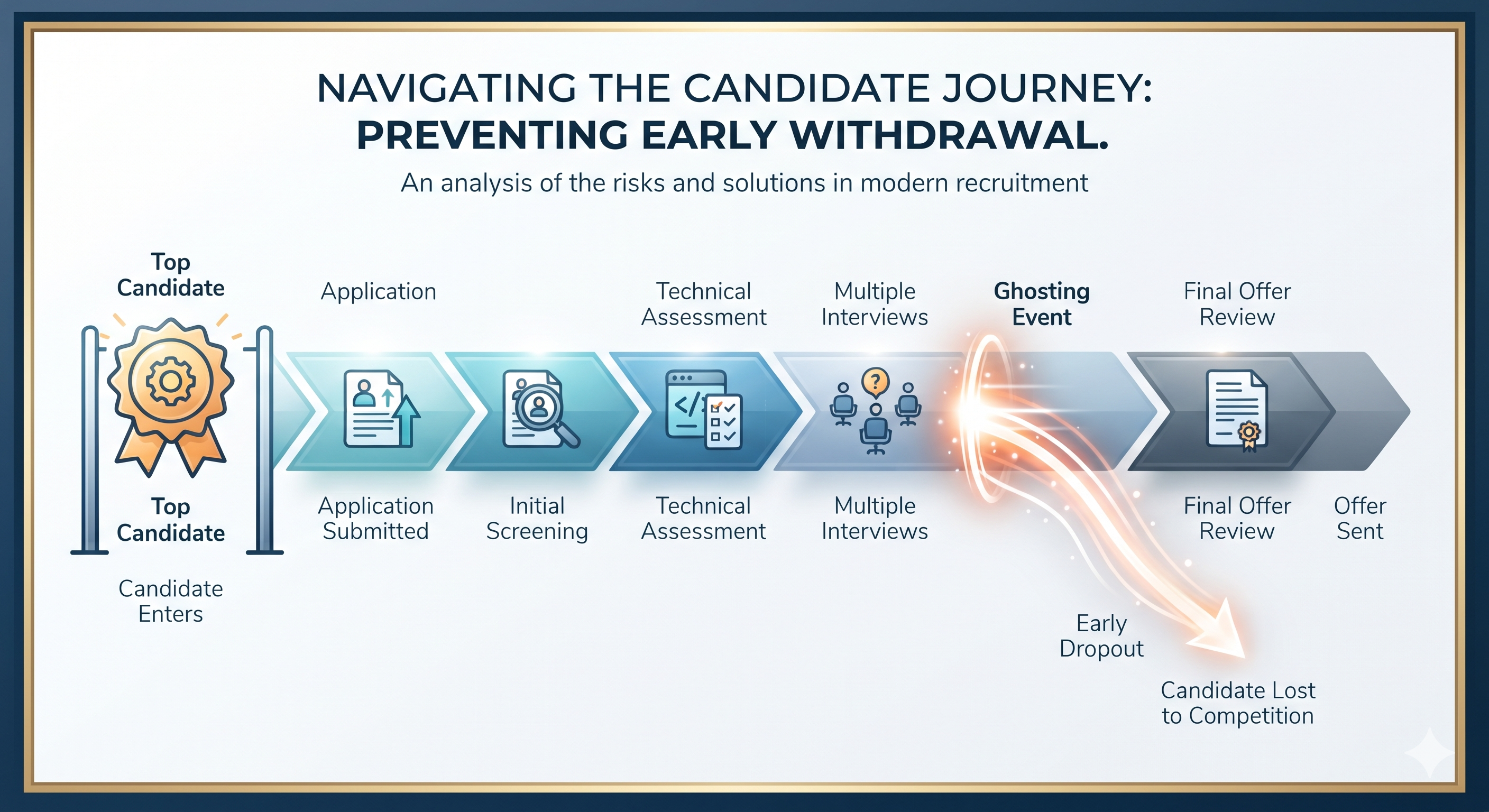
In the fast-paced modern job market, candidates who have changed roles several times are frequently labelled as “job hoppers” and dismissed before ever reaching the interview stage. Employers often worry that frequent moves signal a lack of loyalty, trouble with commitment, or an inevitable early departure.
However, employment history rarely tells the complete story. Automatically filtering out these candidates means organisations risk overlooking exceptional talent, versatile expertise, and strong professional potential. The secret to effective recruitment lies in understanding the context behind each move rather than evaluating dates on a CV in isolation.
1. Job hopping through necessity: circumstances beyond control
Many career transitions occur due to factors entirely outside a candidate’s control. Dismissing these professionals overlooks resilient and capable talent. Common driving factors include:
- Company restructuring and redundancy. Corporate closures, downsizing, or strategic restructuring often force competent employees into the job market.
- Relocation and personal circumstances. Family responsibilities, partner relocations, or major life changes frequently necessitate geographical or organisational shifts.
- Fixed-term and project-based contracts. Certain sectors — such as construction, engineering, event management, and technical contracting — are inherently fluid, relying heavily on short-term assignments or temporary deployments.
When evaluating candidates with diverse employment timelines, employers should focus on what they delivered during their tenure. Key indicators of a strong candidate include clear, consistent explanations, documented achievements in each position, and positive professional references.
2. Moving to accelerate career development
For many ambitious professionals, changing roles deliberately is a strategic choice to broaden experience, acquire new skills, and align with long-term career trajectories. This is particularly prevalent in the early stages of a career when individuals are actively refining their professional focus.
Career-driven moves often yield diverse advantages, exposing professionals to:
- Varied corporate cultures, larger teams, and alternative working structures
- Expanded operational responsibilities, larger budgets, and new technologies
- Cross-industry insights and multi-disciplinary problem-solving frameworks
Rather than indicating instability, these progressive transitions frequently demonstrate ambition, adaptability, and an active commitment to professional growth.
3. When frequent moves warrant closer examination
While many transitions are entirely legitimate, certain employment patterns do require closer scrutiny during the screening and interview process. Potential warning signs include:
- Repeated, unexplained short-term tenures lasting only a few months
- Consistently negative or defensive commentary regarding previous employers
- A complete absence of measurable achievements or professional progression
- Contradictory explanations or an inability to accept personal accountability
To separate candidates who struggle with retention from those who are simply adaptable, interviewers should ask targeted questions: Why did you accept each role, what did you achieve, what drove your departure, and what are you seeking in your next professional home?
4. Assessing patterns, achievements, and motivation
Length of service is only one metric of professional contribution. A high-performing candidate can drive significant organisational value in a relatively short timeframe by stabilising an underperforming team, streamlining compliance, reducing operating costs, or executing a major project.
When reviewing a dynamic employment history, employers should look for broader patterns:
- Professional discipline. Did the candidate remain within a consistent professional trajectory?
- Increasing responsibility. Do successive roles reflect growing leadership and scope?
- Long-term objectives. Do the candidate’s career goals align naturally with the open position?
Balancing retention risk against potential value
Every hiring decision carries an inherent degree of risk; longevity at a single organisation does not guarantee future commitment, just as a varied background does not guarantee an early exit. By looking beyond chronological dates and focusing on skills, achievements, motivation, and cultural fit, employers can identify adaptable, ambitious professionals who bring fresh perspectives and immediate impact to the organisation.